
Menu
As a general rule, good mileage for a used car typically means about 10,000 to 12,000 miles per year. For example, a 5-year-old car should have around 50,000 to 60,000 miles. In this article, we’ll guide you on what is good mileage for a used car and how to evaluate if a used car’s mileage is reasonable for its age, helping you in your searching process.
Key Takeaways
- Average mileage for a used car is typically 10,000 to 12,000 miles per year; understanding this can help assess the car’s usage and potential wear.
- Ideal mileage benchmarks vary by car age, with a 5-year-old vehicle ideally having 50,000 to 60,000 miles, guiding pricing and maintenance expectations.
- Consider factors beyond mileage such as maintenance history and driving conditions, as a well-maintained high-mileage car may be a better deal than a low-mileage vehicle suffering from neglect.
- Consider the inventory of used cars available, as a diverse selection can provide more options that meet your mileage and condition criteria.
Understanding Average Mileage
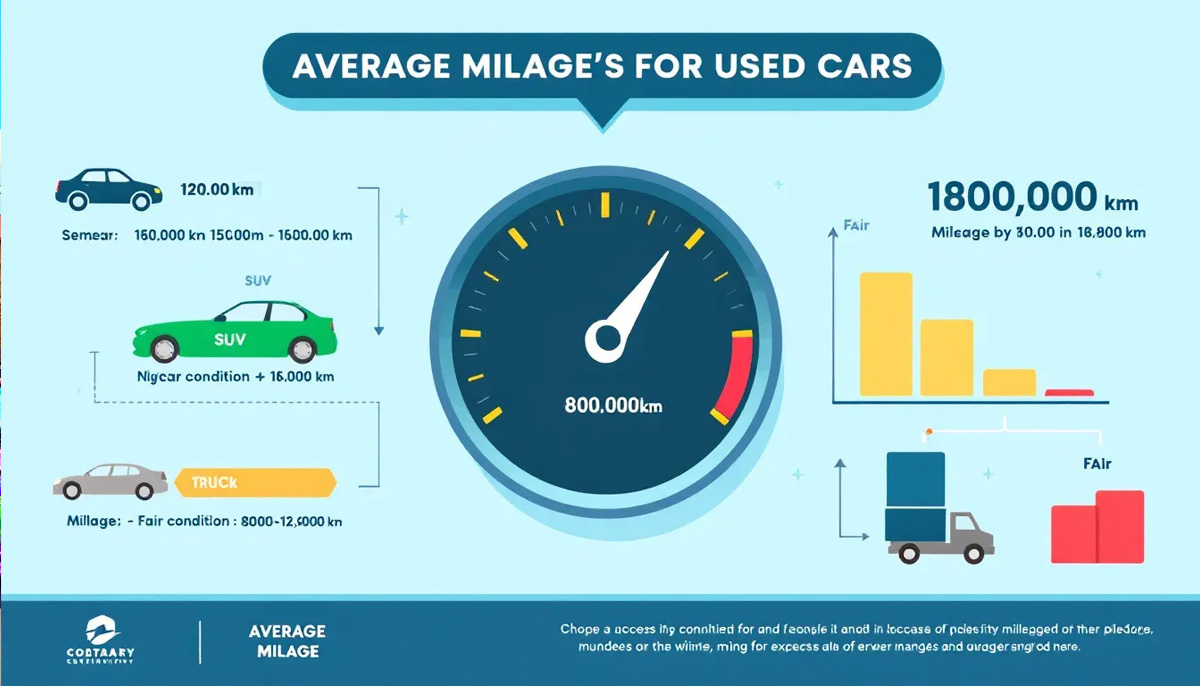
When evaluating a used car, it’s crucial to consider the average mileage it has accumulated. You can expect a vehicle to gather about 10,000 to 12,000 miles annually. This standard serves as a gauge for whether the car has been heavily or lightly utilized. To quickly assess this, multiply the age of the car by 12,000 – such calculation provides a baseline against which you can judge if its mileage is typical for its age.
Take a five-year-old vehicle as an example. Around 60,000 miles would be anticipated on its odometer. Let’s walk through how to assess if there are significantly more miles displayed than this benchmark, which suggests potential heavy usage and consequent wear that might have occurred over time. On the other hand, notably fewer miles could imply infrequent use which may bring with it different types of mechanical issues due to underuse—understanding these subtleties aids in making an informed decision when purchasing.
Nevertheless, simply looking at total mileage doesn’t reveal every detail regarding condition or history—a deeper look into how those miles were racked up is essential too. For instance, a higher number of highway-driven kilometers often leaves cars in better shape compared with ones primarily driven through congested city traffic, even though they both show similar mileages. It’s also important to differentiate between city miles and highway miles, as vehicles driven primarily in the city may have more wear and tear compared to those driven mostly on highways. Bearing this distinction mind helps us explore optimal mileages relative to the various ages of vehicles available.
Ideal Mileage for Different Car Ages
When examining used cars, it’s important to assess the car’s age and mileage together. Each age category typically corresponds with a specific range of expected mileage, which helps determine whether a vehicle has been excessively or minimally used. For instance, one would anticipate that a vehicle up to five years old should normally register between 36,000 and 50,000 miles.
For more precision within this spectrum, a car or truck aged three years is ideally expected to show around 36,000 miles on its odometer as an indication of standard use and consistent upkeep. Conversely, by the time a car reaches five years old it might be estimated to have covered somewhere in the vicinity of 50-60 thousand miles. When evaluating vehicles at the decade mark—ten-year-old cars—the ideal mile marker you’d look for falls around approximately 120k miles using these metrics ensures that you avoid paying extra for cars potentially nearing costly maintenance periods.
Keep these numbers in mind as general standards. Variations can exist where some vehicles may feature higher or lower than average mileage while remaining in top condition nonetheless. Always consider such averages as starting points from which Examination into any particular car’s history should proceed. However, there is no hard and fast rule, as variations can exist where some vehicles may feature higher or lower than average mileage while remaining in top condition.
Factors That Affect Used Car Mileage
When assessing a used car or SUV, while mileage is a key consideration, it’s not the sole determinant of a vehicle’s condition. A car’s overall wear can be significantly influenced by factors other than its recorded miles. For example, cars that have mostly been driven in city conditions—with their frequent stop-and-go traffic—tend to exhibit more rapid wear compared to those primarily operated on highways, where driving is less erratic and tends to be steadier.
Maintenance history stands out as another pivotal factor determining a car’s health. The commitment to regular maintenance routines such as timely oil changes and tire rotations plays an essential role in ensuring the durability and dependability of any vehicle. Cars that have changed hands fewer times might also suggest more consistent upkeep since each transfer between previous owners has the potential to introduce variances in how well-maintained the car remains.
When evaluating your options for purchasing a used car, consider these elements alongside mileage data. It could turn out that a high-mileage but meticulously maintained automobile offers greater value than one with lower mileage but lacking proper care attention—which we will Analyze while discussing the advantages and disadvantages associated with higher-mileage vehicles.
High Mileage Cars: Pros and Cons
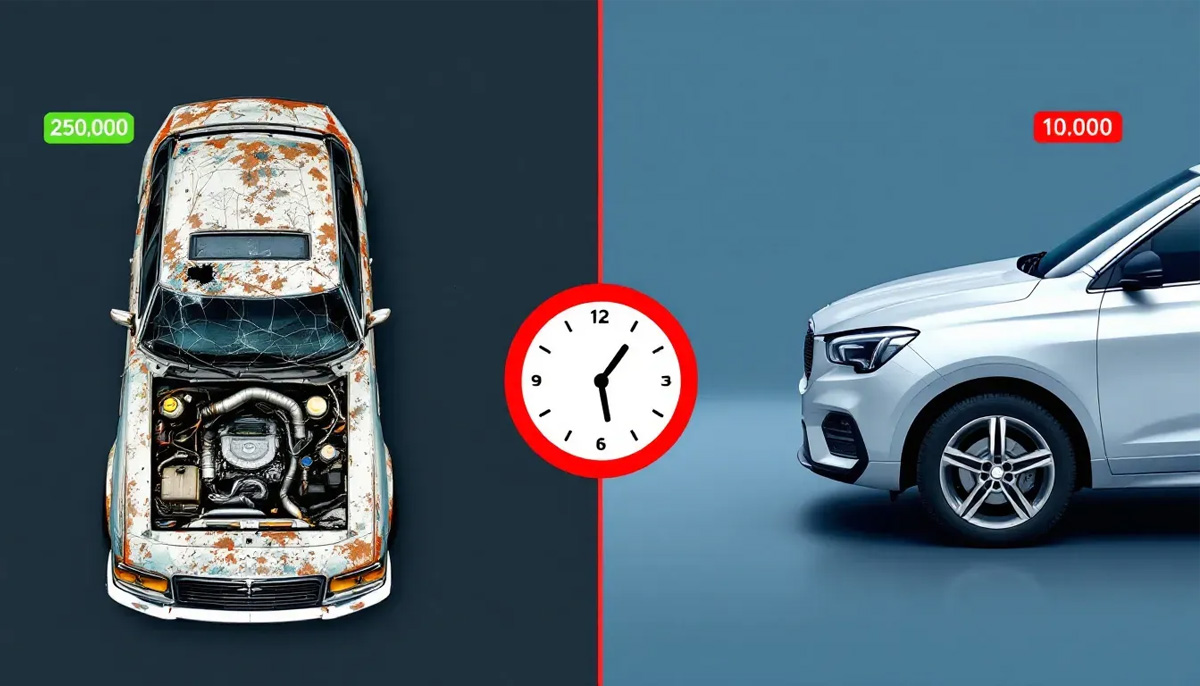
Purchasing a higher mileage vehicle often presents an excellent opportunity for buyers mindful of their finances. Their most noticeable benefit is a reduced initial cost. Vehicles with higher mileage tend to be priced lower than similar models boasting lower mileage, making them attractive for those seeking value and willing to allocate funds towards ongoing upkeep, ultimately putting you behind the wheel of a car that fits your budget.
As these vehicles have typically undergone the bulk of their depreciation already, they’re better at retaining their worth moving forward. Insurance expenses are usually more affordable for high-mileage vehicles due to their diminished market valuation. There’s a trade-off. Such cars might necessitate more regular maintenance owing to increased wear on mechanical parts and may no longer fall under warranty coverage—shifting repair costs onto the owner.
The longevity of any vehicle can also be impacted by its driving history. For instance, cars primarily operated on smooth highways sustain less damage over time compared to those that traverse challenging terrains regularly. It’s crucial when contemplating the purchase of a car with significant mileage that you examine its service records closely—and perhaps engage an expert mechanic’s services—to perform an exhaustive inspection before buying.
Ultimately, choosing a high-mileage automobile doesn’t automatically equate to poor performance or reliability provided it has been kept in good condition. Indeed such cars can still deliver satisfactory efficiency in usage terms if maintained diligently enough—but careful evaluation is necessary especially when deliberating between two potential purchases bearing different mileage figures.
Why Low Mileage Isn't Always Better

Opting for a car with low mileage might appear advantageous, but such vehicles can come with unexpected complications. Vehicles that rack up significantly less than 12,000 miles annually could suggest infrequent usage, which in turn may precipitate mechanical issues. While low mileage might suggest less wear, it can also indicate infrequent usage, which may lead to mechanical issues. As an illustration, one car used sparingly might experience tire dry rot due to inadequate maintenance and exposure to detrimental elements.
In cars that have traveled fewer miles, the rubber seals and gaskets may become brittle and crack if the vehicle is not operated on a regular basis. This can lead to oil leaks. Fluids within these lower-mileage vehicles are prone to deterioration over time, potentially leading to engine troubles should the car fail to receive consistent upkeep—repairs for these problems can prove expensive and may negate the advantages typically associated with minimal mileage.
The cost of warranties tailored for vehicles boasting little wear from driving can be steep while also falling short in covering every issue that surfaces following the purchase of your vehicle. It’s wise to meticulously examine both overall condition and service records when contemplating a low-mileage vehicle given existing concerns before finalizing any decision on acquiring it.
Certified Pre-Owned Vehicles
Opting for a certified pre-owned car brings with it numerous advantages that are appealing to buyers. The guarantee of dependability and lower odometer readings is due to the comprehensive checks these vehicles undergo. Vehicles marked as certified pre-owned must pass stringent inspections and secure verifying processes to confirm their condition and operational soundness.
Certified pre-owned cars often come backed by warranties covering significant components like the powertrain, and some even provide roadside assistance. Such coverage can offer not only comfort but also safeguard against unforeseen repair expenses. Perks such as free maintenance or travel protection might be included in many certified pre-owned programs. For more information on certified pre-owned vehicles, feel free to contact your local dealership.
Selecting a certified pre-owned vehicle allows one to acquire a vehicle that has been kept up well while mitigating the risks typically associated with purchasing used cars. It’s important now to consider how mileage influences the pricing of used vehicles.
How Mileage Affects Used Car Prices

The number of miles on a used car is a key factor in determining its price. As the mileage goes up, the cost to purchase the vehicle typically decreases. A new car can see its value plummet by as much as $10,000 after only being driven several thousand miles. Once this steep initial loss in value occurs, the decline in value tends to level out, with an average decrease ranging from 25 cents to 50 cents per mile.
When evaluating vehicles, particularly regarding mileage, all other variables should be equal to ensure a fair comparison, and checking reliable website resources can help verify this information.
Due to this trend in valuation, vehicles that have accumulated more miles are often priced lower. Nevertheless, it’s crucial for buyers to confirm actual mileage through detailed vehicle history reports so as not to overlook any inconsistencies or evidence of odometer tampering.
Understanding how mileage influences the pricing of cars allows prospective buyers to make well-informed choices when purchasing and potentially achieve cost savings.
Choosing Reliable Brands
Selecting a trustworthy manufacturer is essential when it comes to high mileage cars. Brands such as Toyota and Honda are renowned for their durable vehicles, which makes their cars with high mileage more desirable. For instance, there’s a 36.6% probability that the Toyota Tundra will surpass 250,000 miles. Similarly, the likelihood of the Honda Ridgeline exceeding this distance stands at about 25,8%.
When comparing two cars of the same make, model, and year, human judgment can significantly impact their value based on mileage and overall condition.
Models from Chevrolet like the Suburban and Silverado also possess notable chances of reaching beyond 250,000 miles—22.0% and 18.8%, respectively. Other Honda models including the Pilot and Accord have substantial potential for durability—with probabilities standing at 17.5% and 16.6%, respectively—for achieving this significant milestone in miles traveled. Moreover, even Nissan and GMC showcase reliability in their respective Titan and Yukon models by having odds of attaining similar distances (14 ).
When you commit to a reliable car brand known for longevity, it instills assurance that if properly maintained, the car will last. A car model from such manufacturers can be expected to continue performing effectively over an extended period with considerable mileage on its record.
Diesel vs. Gasoline Engines
Opting for either diesel or gasoline engines can significantly influence a vehicle’s durability and performance when it comes to high mileage situations. Diesel engines employ compression ignition, affording them the ability to produce increased torque and maintain efficiency while under load, which contributes to enhanced endurance at higher mileages.
Conversely, gasoline engines ignite fuel using spark plugs, impacting their longevity and how they perform as they accrue similar levels of high mileage. The distinct combustion methods between these engine types are fundamental in determining their respective performances and life spans over an extended period.
Understanding these variances is crucial when selecting an appropriate engine type for vehicles expected to sustain high mileage, and this decision can often be made in a few seconds based on your specific needs. Of course, other factors such as maintenance history and driving conditions also play a crucial role in determining a vehicle’s longevity.
The Importance of Vehicle History Reports

Reports on a vehicle’s history are critical when assessing pre-owned vehicles. These reports can disclose if the car has ever been stolen, assigned a salvage title, or involved in significant collisions. They frequently provide data about outstanding recalls that have not been addressed, ensuring a secure and informative website experience for users.
A car’s mileage can indicate potential issues, suggesting that exceeding a certain mileage threshold may warrant concern regarding maintenance and long-term reliability.
An exhaustive report on a vehicle’s history may offer insight into the car’s environmental footprint by examining its maintenance record. It is essential to authenticate service documents and vehicular chronicles as odometers of cars with low mileage might be manipulated. This verification guarantees that the seller’s representation of the car’s state and backstory is accurate.
Utilizing these reports while considering used cars can steer you clear of potential snags, ensuring your decision to purchase is thoroughly informed.
Summary
In summary, grasping the significance of car mileage is imperative when buying a used vehicle. It’s important to be aware of both the average mileage for cars and to weigh the advantages and disadvantages of vehicles with high versus low mileage. Certified pre-owned vehicles come with extra guarantees, and accessing detailed vehicle history reports can give you an extensive overview of a car’s background. When comparing two cars, consider factors such as mileage, maintenance history, and overall condition to make an informed decision.
The cornerstone to making a wise choice in your car purchase is rooted in comprehensive assessment and educated choices. Apply the advice and knowledge provided here as you venture into the realm of pre-owned cars so that you can proceed with assurance and end up owning a dependable vehicle.
Frequently Asked Questions
What is considered good mileage for a used car?
Good mileage for a used car is typically around 10,000 to 12,000 miles per year, so you can assess its condition by multiplying the car’s age by 12,000 to see how many miles it should have.
Are high-mileage cars worth buying?
High-mileage cars can be a good investment if they have a solid maintenance history, as they typically come with lower purchase prices and insurance costs.
However, be prepared for potentially more frequent repairs. However, if the mileage is significantly higher than average, it may raise concerns about the car’s maintenance and long-term reliability.
Why might low mileage cars have issues?
Low mileage cars can develop issues from infrequent use, resulting in problems such as dry rot in tires and degraded rubber seals.
It’s important to consider these factors when evaluating a low mileage vehicle.
What are the benefits of certified pre-owned vehicles?
Certified pre-owned vehicles provide enhanced reliability, often backed by lower mileage and rigorous inspections, along with warranties that typically cover the powertrain and may include roadside assistance, ensuring peace of mind for buyers.
How does mileage affect used car prices?
Mileage significantly affects used car prices; as it increases, the value typically decreases, especially after the initial miles.
Therefore, lower mileage generally correlates with a higher selling price.